


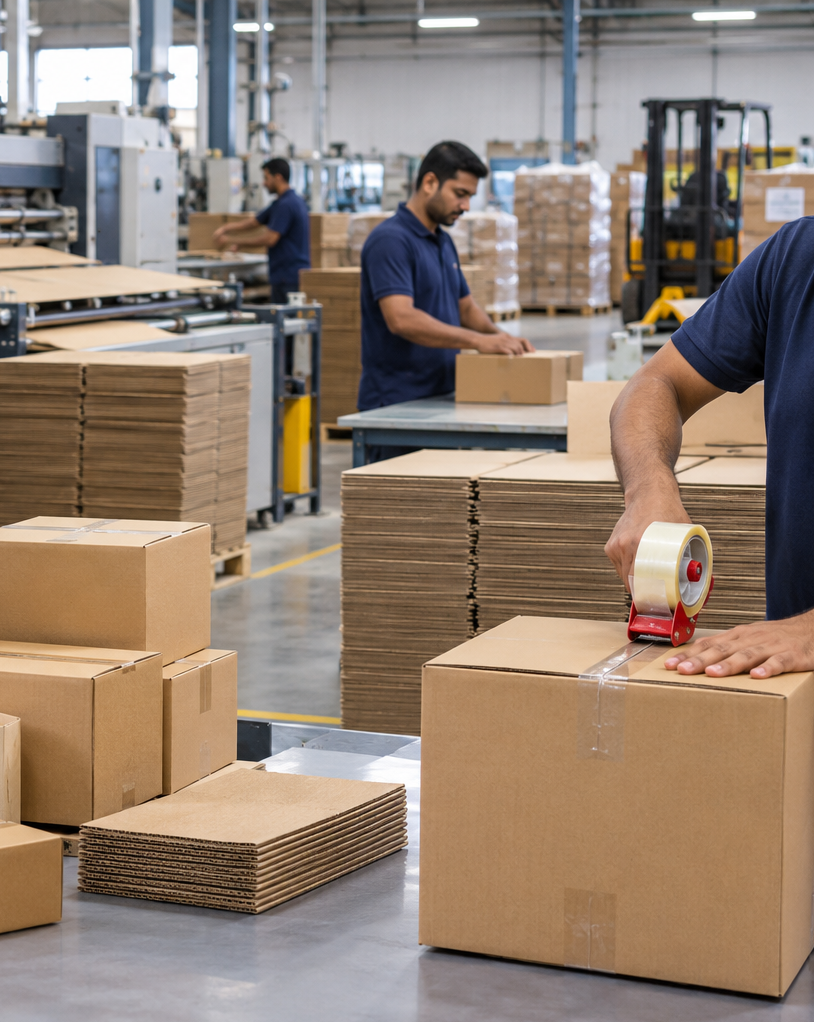
Selecting packaging becomes complicated when businesses begin with the question, What box do we need? A more useful starting point is, What does the package need to do?
Companies searching for box manufacturers in Nashik may require packaging for storage, transportation, retail presentation, product grouping, corporate gifting, distribution, and e-commerce fulfilment. Each application can require a different approach to size, construction, printing, and finishing.
What Product Will Go Inside?
This is the first question a manufacturer needs to understand.
Provide accurate dimensions, weight, quantity per package, shape, and fragility. If the product contains multiple components, explain how they should be arranged inside the box.
A physical sample can be especially useful when the product has unusual dimensions.
Where Will the Box Be Used?
Packaging requirements change across the supply chain.
A box used mainly for internal storage may prioritize strength and identification. A customer-facing carton may need greater emphasis on graphics and finishing. An e-commerce shipment may need compact dimensions and secure closure. A retail package may need to fit shelves while communicating essential product information.
Understanding the package journey helps prevent inappropriate specifications.
How Much Weight Will It Carry?
Weight influences material and construction decisions.
Businesses should provide the packed weight rather than the weight of a single product when multiple units will be placed together.
Stacking also matters. A package at the bottom of a stack experiences different pressure from one stored individually.
Is Custom Printing Required?
Printed boxes can support both branding and operational identification.
Businesses may include:
- Brand name
- Product information
- Handling instructions
- Batch identification
- Storage guidance
- Contact details
- Product graphics
- Regulatory information where applicable
Artwork should be reviewed carefully before production because packaging is often produced in quantity.
What Quantity Is Needed?
Order quantity can influence production planning and inventory management.
Businesses with recurring demand should estimate monthly consumption instead of considering only the immediate requirement. A planned supply schedule can help avoid both shortages and unnecessary accumulation of packaging stock.
Companies with seasonal demand should communicate anticipated peaks early.
Will One Box Size Be Enough?
Businesses with multiple SKUs frequently use a single oversized box because it appears simpler. This can create excessive empty space and inefficient packing.
Developing a small range of standardized sizes may provide a better balance between inventory simplicity and packaging efficiency.
Product families can be grouped by dimensions, weight, and handling requirements to determine practical box sizes.
Can Samples Be Tested?
Sampling is valuable when introducing a new package.
A sample allows the business to test product fit, closure, handling, stacking, visual appearance, and internal arrangement before larger-scale manufacturing begins.
Teams involved in packing and dispatch should participate in sample evaluation because they often identify practical issues that purchasing teams may not see from specifications alone.
Local Coordination Can Support Faster Decisions
Working with manufacturers in Nashik can make specification discussions easier for businesses operating within the city and surrounding Maharashtra industrial markets.
Amal Offset Products Pvt. Ltd. manufactures printed and packaging products in Nashik, including corrugated boxes, carton boxes, mono cartons, and customized formats. Packaging discussions can begin with product dimensions, usage, expected quantity, printing requirements, and handling conditions.
Choosing a box should never be reduced to dimensions and price alone. Product protection, packing speed, storage efficiency, visual presentation, and supply consistency all deserve consideration.
When businesses approach manufacturers with complete information, they can receive recommendations that are better aligned with real operational needs and avoid repeated changes after production has already started.